

Amazonia Açu at the Americas Society
On view: ART at Americas Society/Council of the Americas, 680 Park Avenue, New York, NY 10065
Gallery hours: Wednesday through Saturday, 11am - 6pm
Closes April 18th, 2026
I made my way uptown to the 68th Street - Hunter College Station to catch Amazonia Açu at the ART at Americas Society Gallery before it closes later this month. The exhibition attempts to reconcile the enormous diversity of life and art across the territories of the Amazon and does so beautifully and with great intention. Led by curatorial advisor Keyna Eleison and co-curated by a committee of representatives from all nine states (Bolivia, Brazil, Colombia, Ecuador, French Guiana, Guyana, Peru, Suriname, and Venezuela) of the territory, Amazonia Açu presents over 50 works by 34 local artists and collectives. While I am clearly biased, I will share some thoughts and observations on the standout textile works of Claudia Opimí Vaca (Tajibo community of the Amazon, Bolivia), Chonon Bensho (Yarinacocha, Peru), Dawa García (Siwütinña community of the Amazon, Venezuela), and Sara Flores (Tambomayo, Peru).
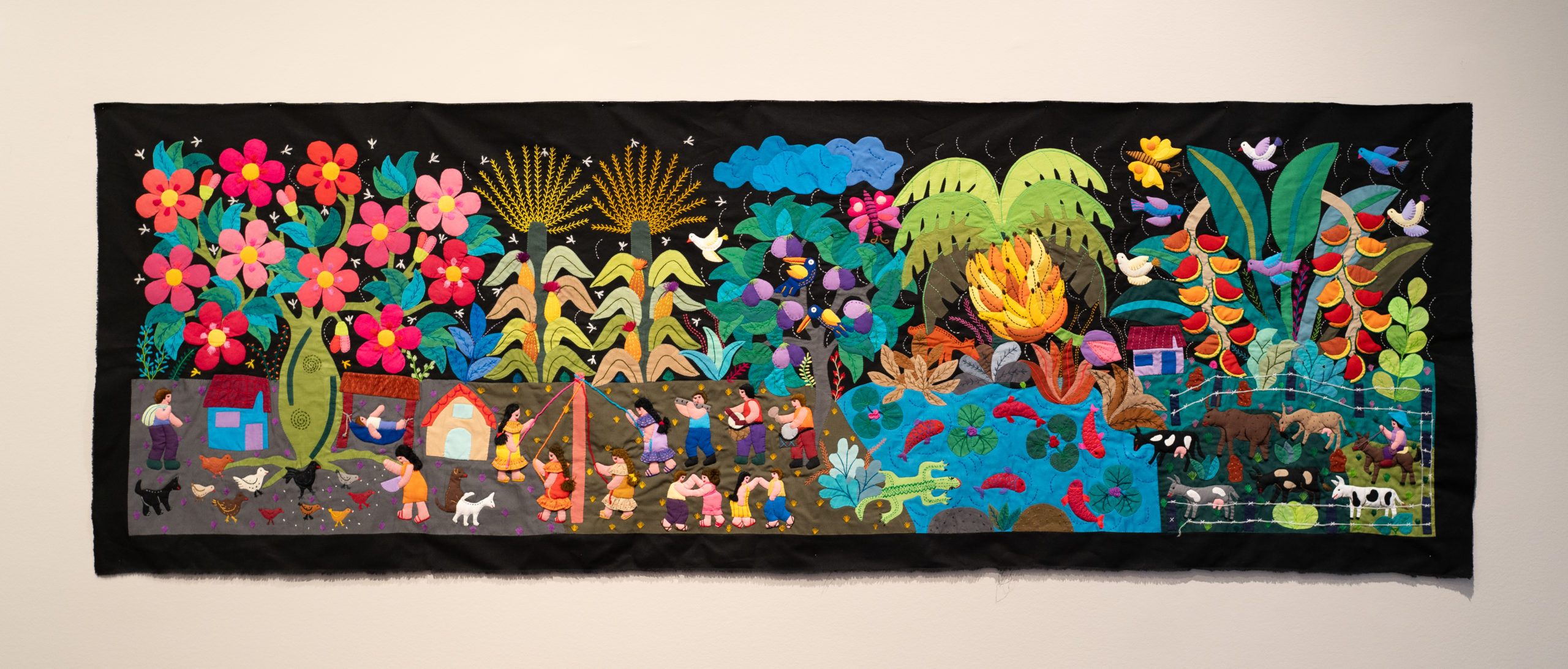
When I first visit a gallery, I try my best to move quickly through an exhibition and let my eyes guide me. This strategy almost always leads me to the back of an exhibition, which at Amazonia Açu took me straight to Claudia Opimí Vaca's Bajo el tomborochi. In this work, Opimí Vaca takes on the mola technique of fabric appliqué to render a scene of life from below the tomborochi tree. Patujú flowers, jaguars, birds, lowland flora, fish, cows, insects, and a fruiting banana tree account for only a fraction of the life which fills the scene. People gather in festivity while others rest. Homes integrate with the palettes of the natural world and the embroidery of their roofs resonate with the plant life around them. It is a wondrous image of harmony in technicolor. The textures of the textiles used for various animals and plants gave me goosebumps. Honestly, I could have spent all morning staring at this work alone.
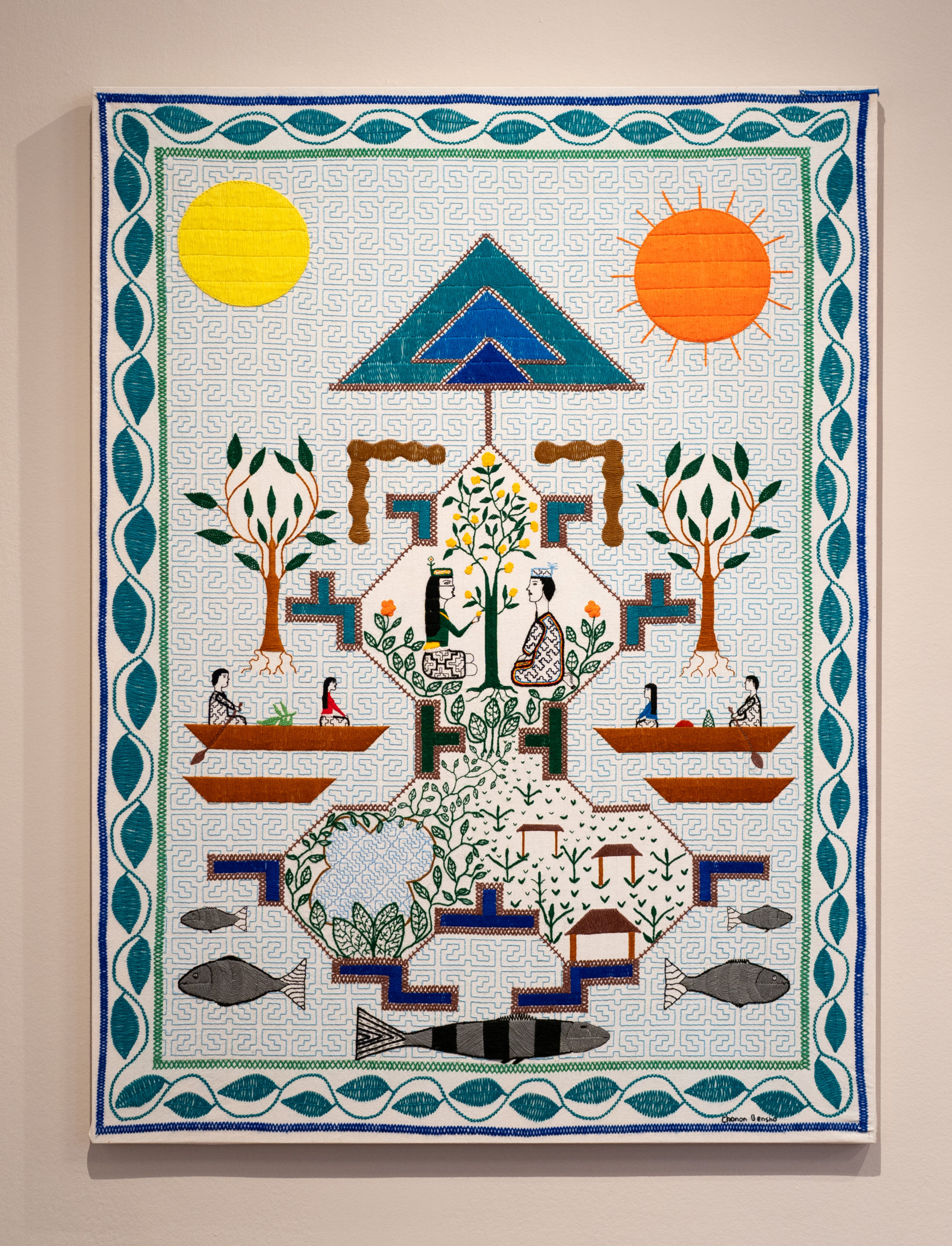
Retracing my steps, I returned to the tedious embroidery of Chonon Bensho's Maya kené. In her work, Bensho reworks kewé—embroidery of the kené Shipibo design tradition—with figurative renderings. Embroidery at this scale is absolutely mind-boggling. I was in awe simply at the thought of how much time and labor must have been spent on these works. The title refers to a way of working the embroidery in a circular motion from the center outwards, emulating the windings forms of Amazonia's rivers. Again, there is a harmony achieved between the different life forms that inhabit the scene. More importantly, embroidery gives the entire work an undeniable rhythm and cohesion.
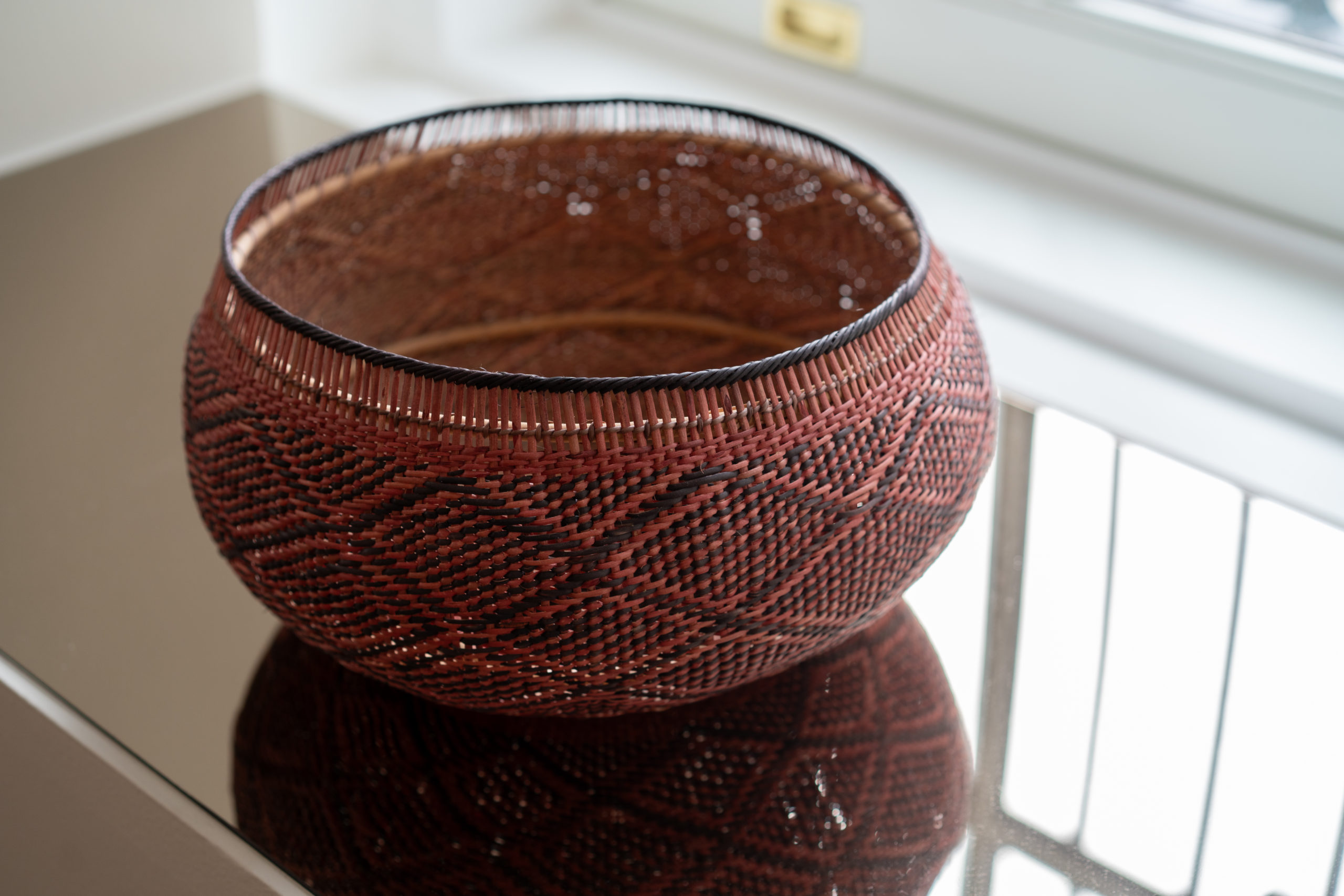
By the windows of the gallery, sitting atop mirrors, were a number of objects, sculptures, and baskets. Dawa García's Jojo (patrón de serpiente roja) most strongly caught my attention. As a leading figure of the Ye'kwana weavers of the Caura River in Venezuela, it was clear to me that this woven basket made of mamure fiber and vine had long lived near water. The mirror emulated the reflection of water—I could not help but feel the basket was admiring its reflection and the beauty of its pattern. This kind of installation was a great reminder to all who visit that this object is meant to live and breathe in other conditions beyond the four walls of a gallery. It is also clear in the craft of the baskets the expertise with which García operates. The installation of García's other baskets on display was also breathtaking.
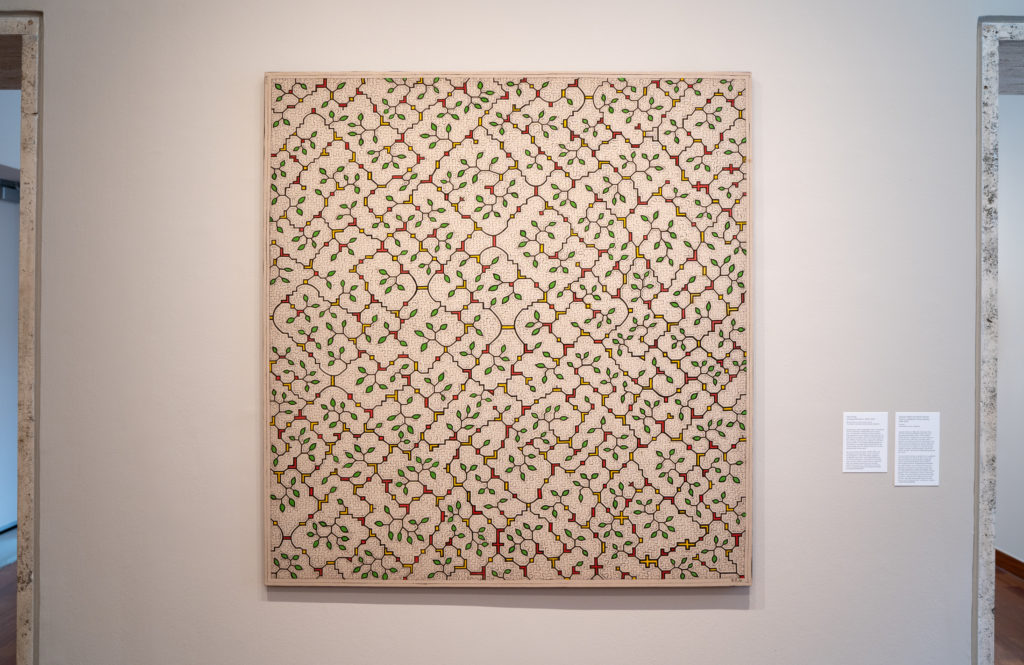
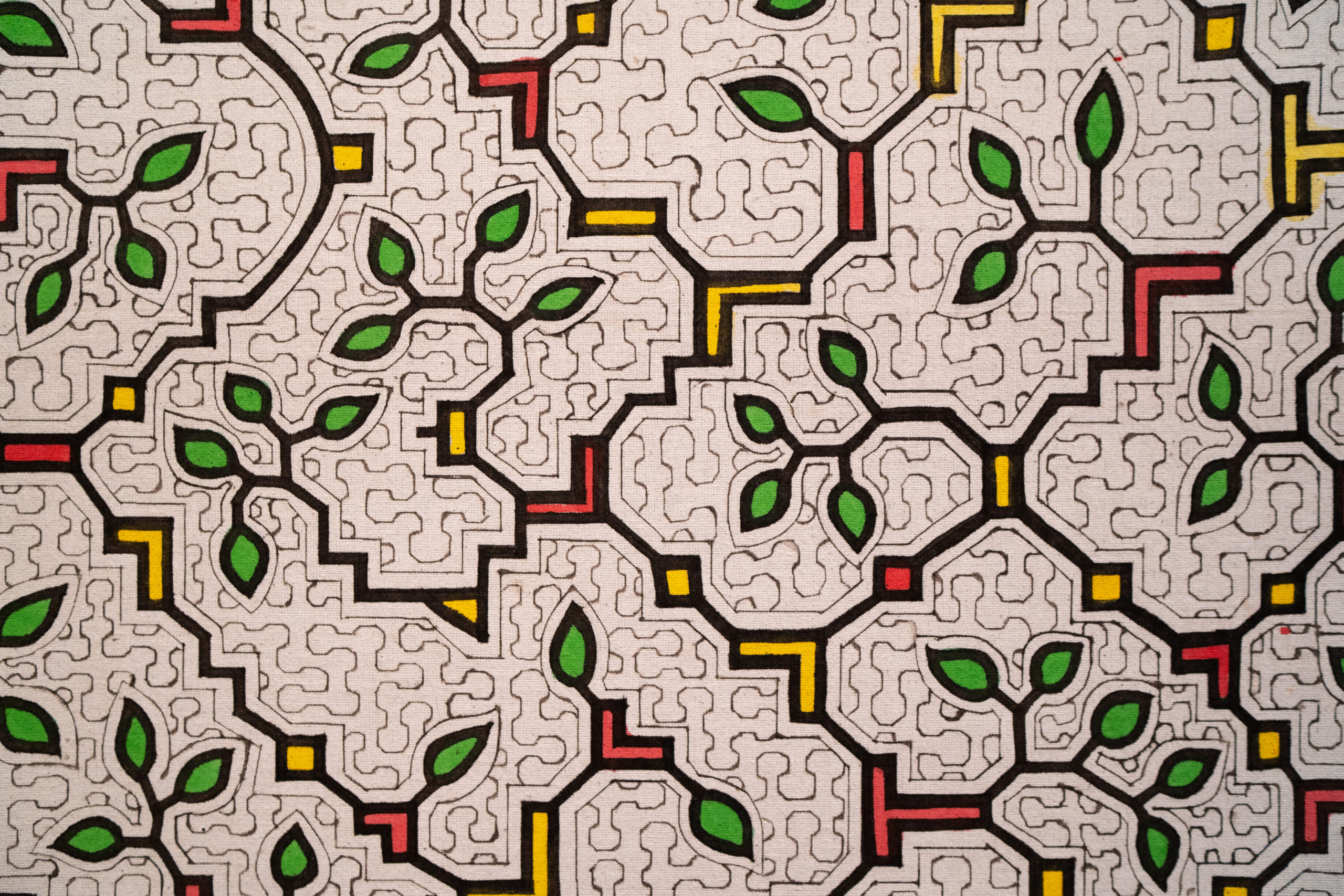
As I made my way out of the gallery, I was struck by Sara Flores's Untitled (Pei Kené 1, 2019). Another reference to the kené Shipibo design tradition, Flores renders hydrographic cycles through the winding sprouts of leaves and roots in forest landscapes. The freehand drawing of natural dyes on wild-cotton canvas leaves a lasting impression. The geometries and interconnectedness of the plants rendered me into a state of passive meditation. I was instantly lost in the excruciating details of her handwork and felt a great deal of relief as I approached the end of my visit to the gallery.
The breadth of textile forms in Amazonia Açu makes it a must-see exhibition before it closes on April 18th, 2026. I urge all to carve out a time during your week to spend time and seriously consider the diversity of artistic practices that emerge from the incredible artists of the Amazon territory.
Geovanni Barrios is the Artist Programs Intern at TAC.
Cover image credit: Detail of Claudia Opimí Vaca, Bajo el tomborichi (Under the tomborichi), 2025, cotton fabric embroidered using an appliqué technique from the Tajibo community of the Bolivian Amazon, 27⅝ × 82¾ inches (70 × 210cm). Photo by Geovanni Barrios.