

Geovanni Barrios, Artist Programs Intern at TAC, spent time with current AIR 17 resident Veronica Bello:
G: What is your family's reception of your work, considering they are prominent characters?
V: They actually don't mind. I do have to say—I don't really ask for permission. To get specific, I work with my mom’s archive. Although it's images of a lot of people, I feel like the owner of the archive is my mother.
G: So you can get away with it?
V: Yeah, to me, she has ownership of the images because she took most of the images, her and my dad. When she hands me the images, I feel like I'm getting consent.
G: She hands you the images?
V: They're all physical media only.
G: Oh! Do you have the film negatives too, or is it just prints?
V: No, my mom never kept the film, and she never digitized anything. I'm also kind of responsible for its digitization.
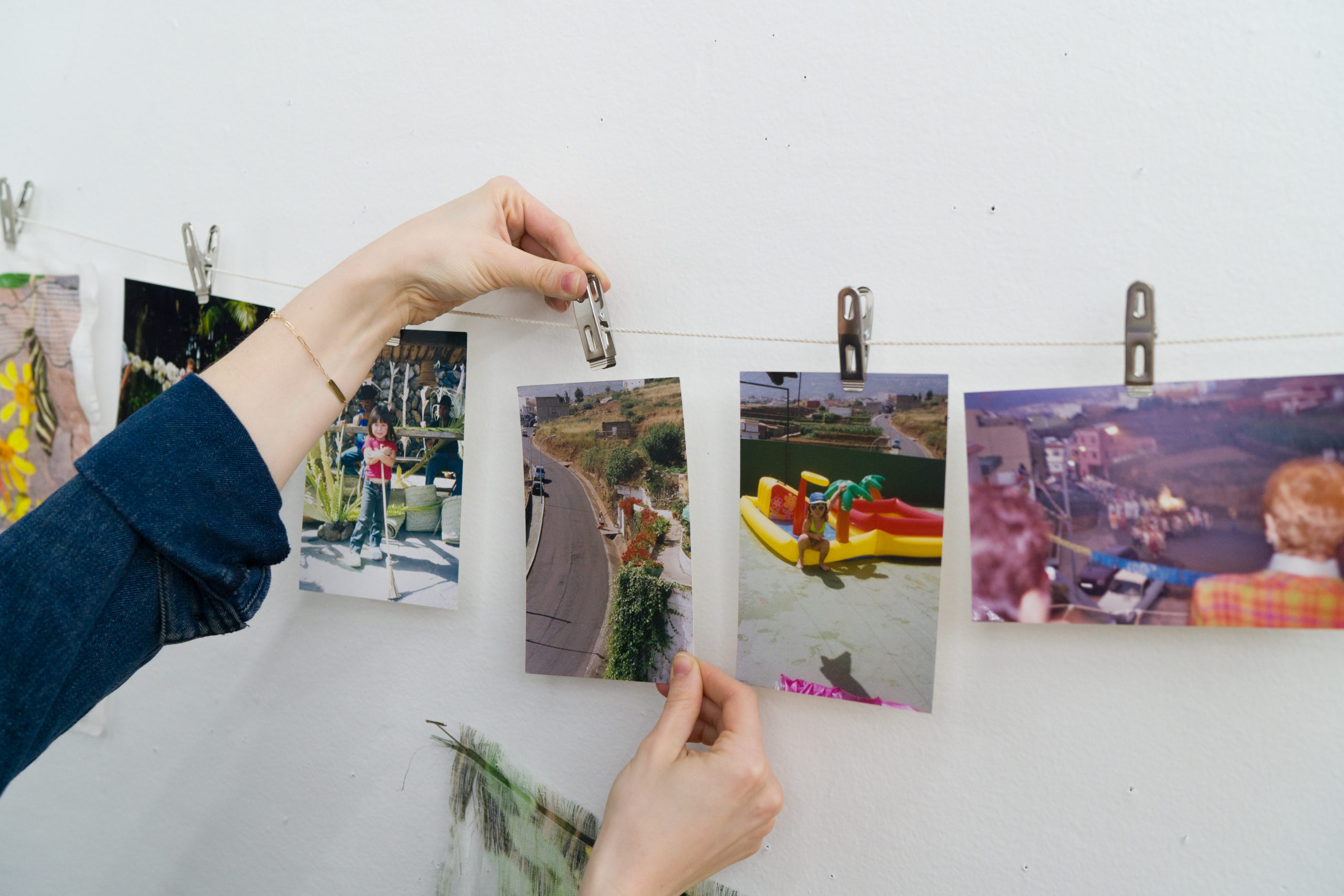
G: How do these pictures show up in your family's life because of that responsibility that you have for managing it? Are you finding other ways of presenting the pictures to your family besides in your work?
V: Yeah, actually I do. So when I'm going through the archive and I find a photo of someone, I usually send it to them if I find that it would bring them joy to see it. I'm constantly sending my brother pictures of him as a kid. I also have a visceral response to the archive—I often cry when I'm going through it, especially when it's photos of both of my parents together because they separated when I was a preteen. Or photos of my grandparents. Both of my granddads are not with us anymore so photos of them elicit a visceral response. Actually, yesterday I had a phone call with my godmother who is my great aunt.
G: On your mom's side?
V: On my dad's side. And she was like, “I was looking at photos of your work and saw Juan!” And Juan is my grandpa. Funny enough, that is actually not him. It’s a photo I took of someone who looked like him. So the work is definitely about him, and I loved that she had such a great reaction to seeing it.
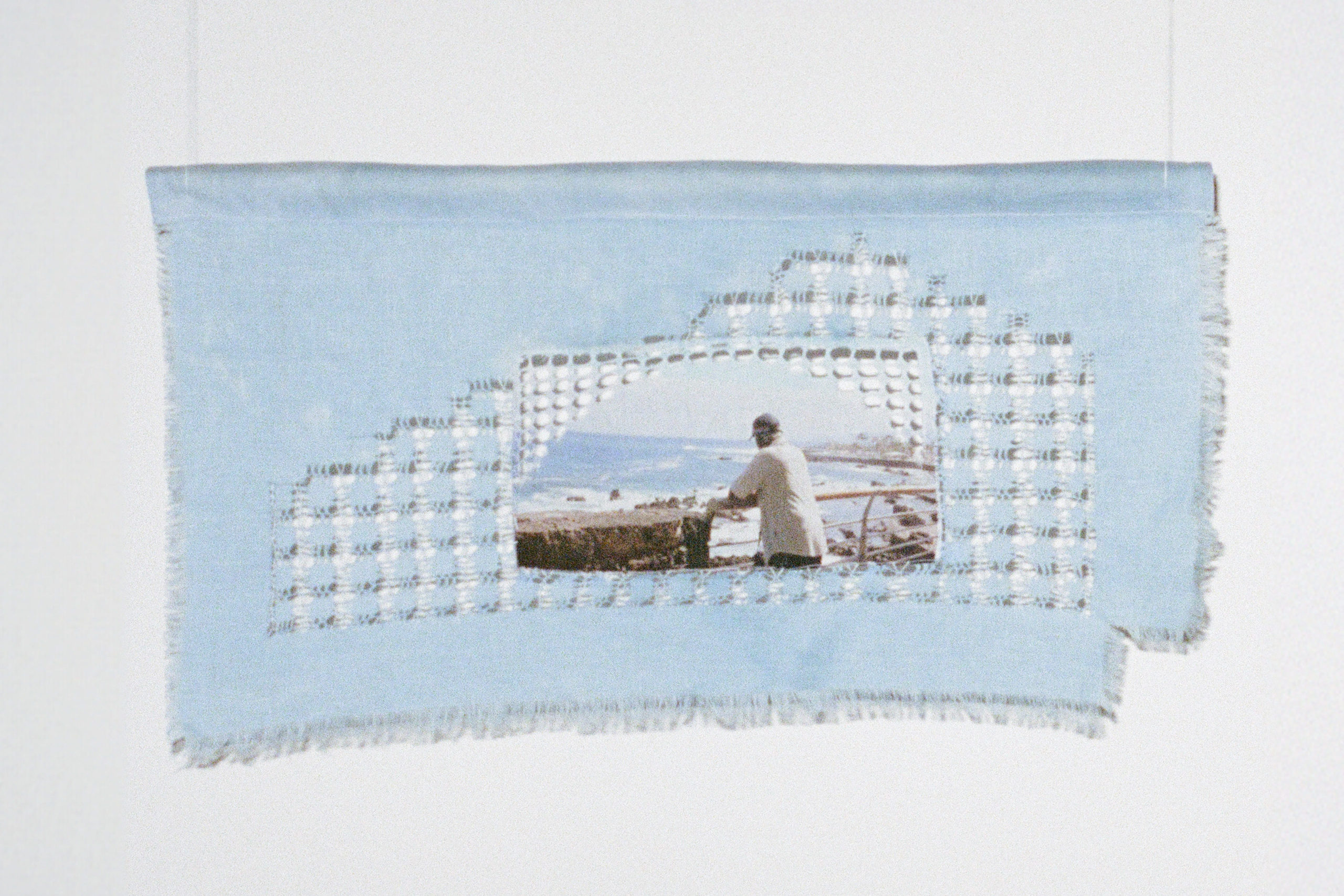
G: It proves the function of the photographs in the work.
V: Exactly. That photo is of a man that I don't know—it is actually a still from a video I took of a man I saw in Tenerife, where my grandpa was born. I thought, this man looks like my grandpa, but my grandpa never went back to Tenerife. So while I am using the archive, I am also kind of tricking it.
I have gone to Tenerife multiple times and I take images. I like the practice of comparing the two. I have a new photo of what it looks like outside my grandma's window [in Tenerife]. Next to an old photo that my mom took and [comparing the two] shows how the landscape has changed. I like the act of collaging the past and the present.
G: Do you mean the human made landscape of Tenerife or the natural?
V: Both. My grandma's house is in an agricultural area up a hill, so these two images highlight the new construction in the area. And interestingly enough, there are some new buildings that are actually abandoned right now. Which underscores the economic state of the island and how young people leave.
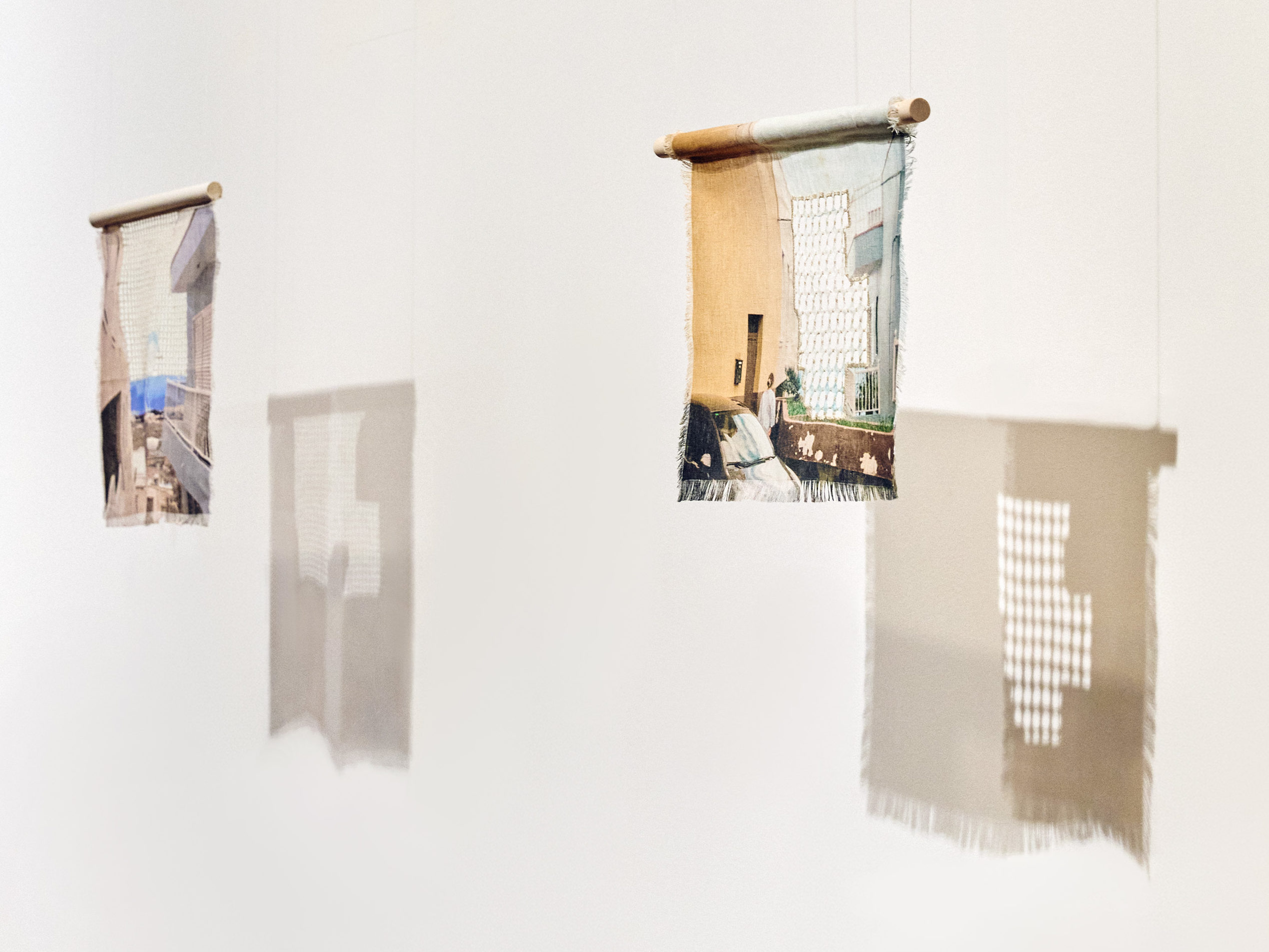
G: How does the landscape of Tenerife compare to the landscape that you saw growing up in Miami or Venezuela? How do you connect those places through your calados?
V: I think it's a little bit abstract for me, as well, because... The whole interest of thinking about the Tenerife landscape or even the Venezuelan landscape and showing it in my work is that it's a way for me to get closer to it. I feel like I have a certain ownership or sense of belonging to these landscapes, and I'm trying to explore that, or lack thereof, through my work. [Tenerife’s] landscapes are so different from Miami or to the Florida landscape. Or even the Mexico City landscape where I spent my early childhood. I basically grew up in places that are very different to what my ancestors did. And there's a weird jealousy there too, where I wish I had experienced those landscapes growing up but I didn't get to.
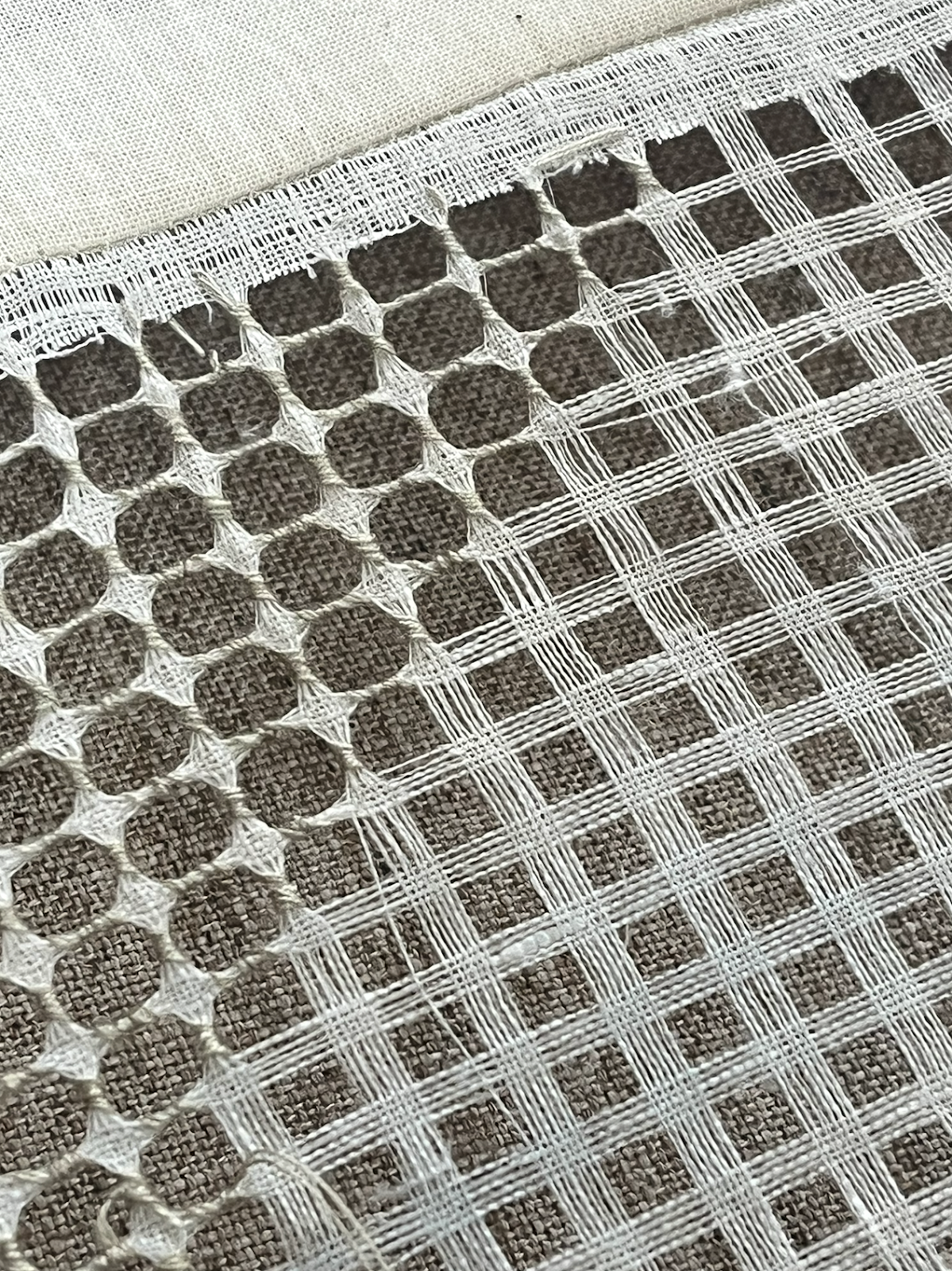
G: How does the process of unweaving in your calados help you connect those places and stories? How does undoing in your process help build up the connections?
V: I was familiar with the lace [technique]. Calado was around me everytime I visited Tenerife. I would see women doing it in public. There's this one place near my grandma's house, that's a sort of cultural patrimony house, La Casa de Los Balcones in la Orotava and they have a lot of archival photos of women working in calado. This place is in the small town where my grandparents grew up, my grandpa used to play the saxophone in that plaza when he was a teenager.
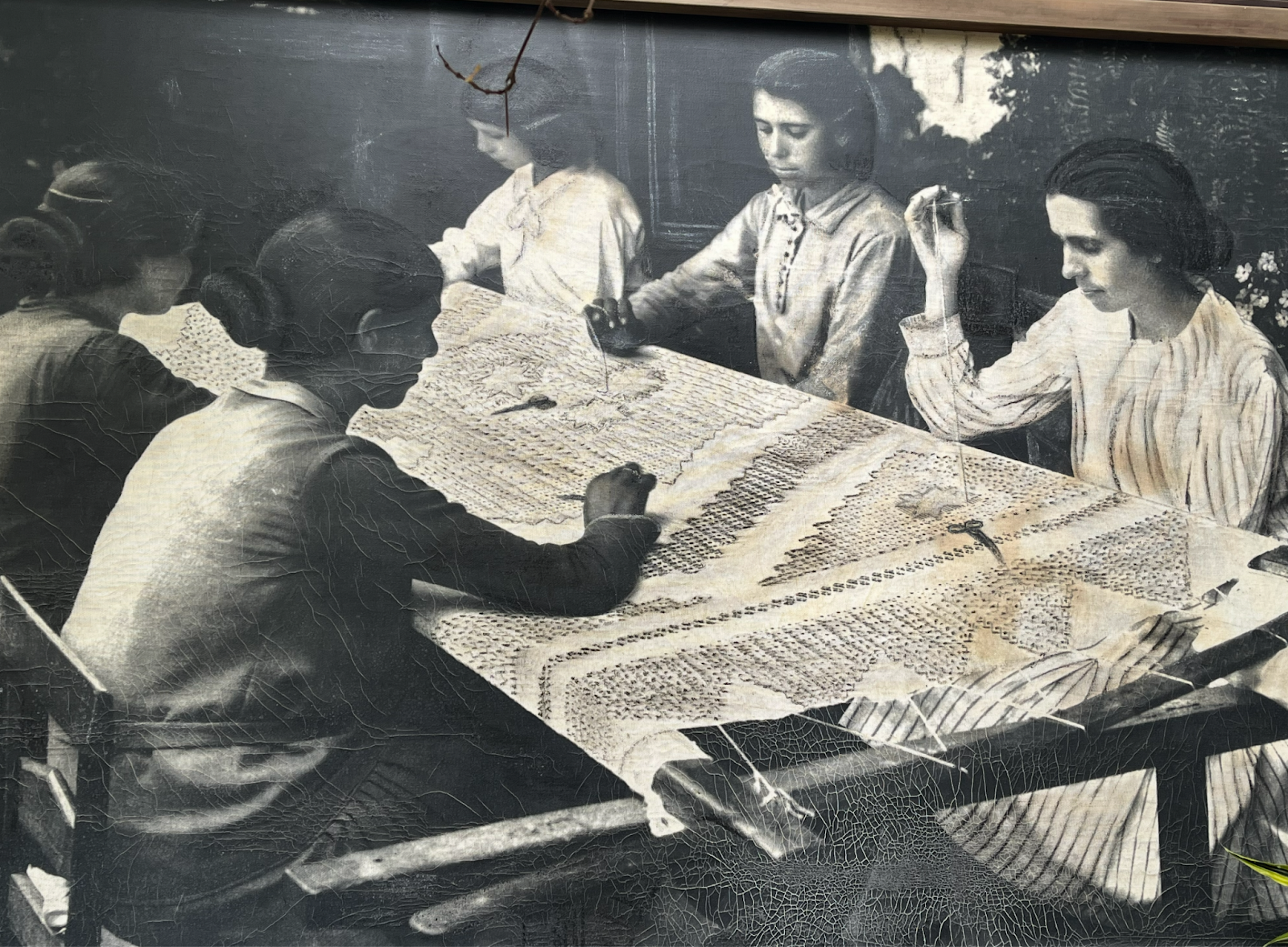
I feel like I was traveling a lot to Tenerife while doing my textiles degree. And when I was doing textiles, in any discipline—weaving or knitting—I was always wanting to make lace. I gravitate, materially and aesthetically, to fabrics that are open and transparent. I am constantly looking for it in the work. And, back then, I was making work about Florida, and I was using these transparencies to talk about either physically the element of water or metaphorically, like fragility and flimsiness, and things being out of reach. When I started asking more questions about calado, I realized that it's a very unique technique because it starts from fabric and not from zero. Especially when I started learning about bobbin lace or when you do knitted lace, it starts from zero. Like you start with nothing, whereas with calado, it's like, okay, you have an existing cloth and you're gonna destroy it to then restitch it. And I remember thinking it was such an incredible process upon learning about it—the idea that I have to destroy something to make it more beautiful. And I also immediately thought about mending. You're forcing yourself to mend something. which I think is so powerful.
G: It occurs to me too that you've been handed something down from your family that you don't have access to, and so this is a way for you to mend that connection. You're doing something new with it and presenting it back to your family.
Where do you start for making a new calado? Could you speak a bit more about your process?
V: It starts with an image. I think about composition—about what I should remove and what I should add. How big it should be. And then I print the image on fabric. Inevitably, pieces change as I go through the process. Once I see it on fabric, maybe I’ll see a new shape that I want to make. And then that initial idea changes when I start removing threads because I make a lot of mistakes.
[Giggling in unison]
Sometimes things get bigger, or sometimes I decide to go with a different pattern. I’m never attached to my beginning idea, because I know it's going to change. It's gonna look different. I'm constantly surprised with how things end up looking because there's no way for me to predict the outcome.
G: Is there a process or method that you have picked up at TAC that you’ll carry on in your practice?
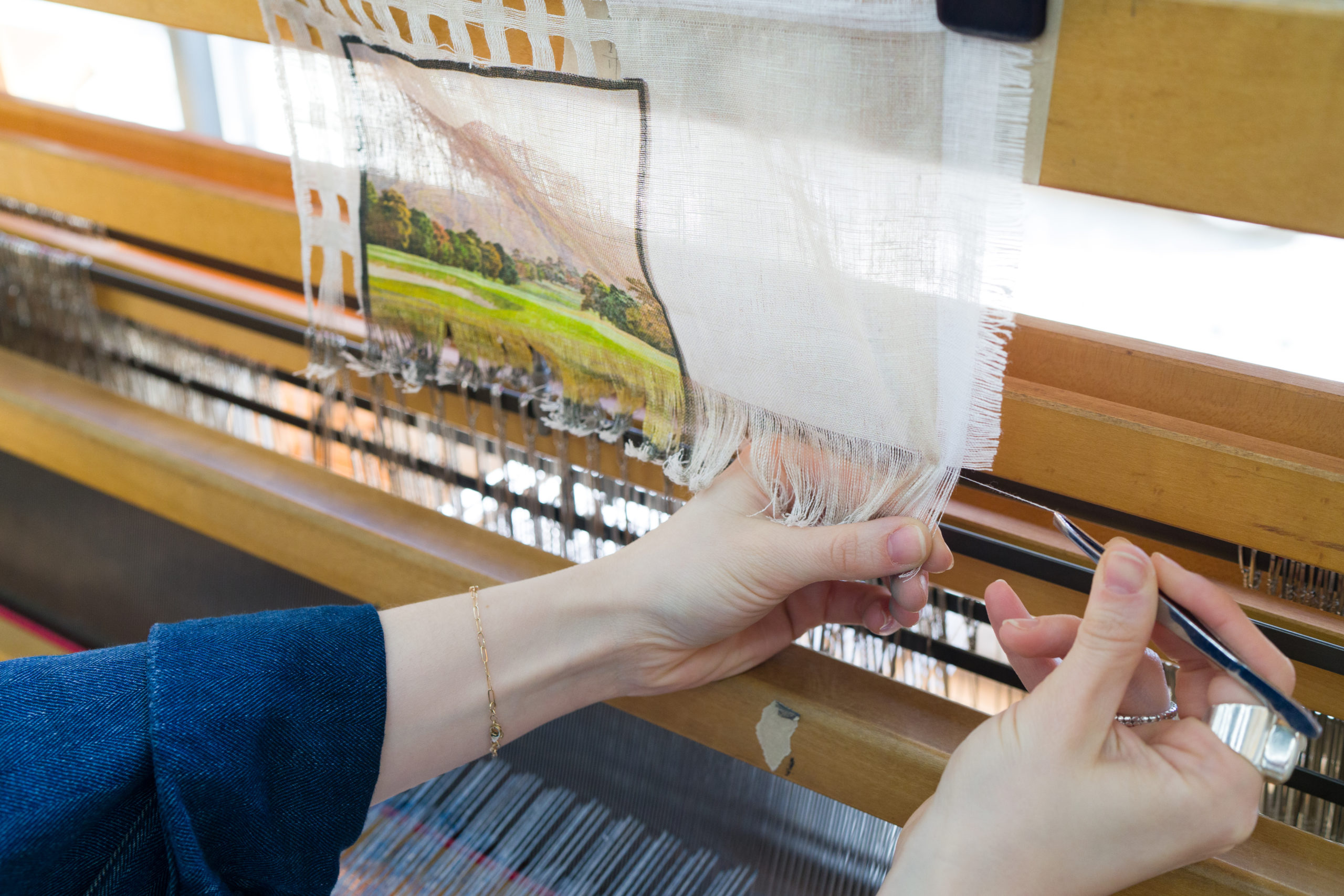
V: Definitely everything that has to do with dyeing and printing. I was able to play with dye and pigment. Using dyes, I learned how to paint on a warp. My biggest aspiration right now is to take more control of the work by becoming the printer of the image. And also to go larger in scale to reintroduce the loom into the work. So essentially, painting on the warp is kind of like the basis of the woven fabric. I’m going to be fragmenting an image from the get go because when you paint on a warp and then you retie it to the loom, it will inherently fragment. So I'm excited about the manipulation that's happening on the image itself. But it also presents a new challenge because I want the images to have a certain fidelity.
G: What about the skill you learned on the weft?
V: Oh yeah! I learned a great new tapestry technique from Kira— it’s called weft interlocking, it essentially makes tapestry with two colors much faster. Two different-colored weft yarns are hooked around each other between the warp threads; you connect two color blocks securely, preventing the open gaps or "slits" that appear in slit tapestry weaving. It feels like painting with yarn as you move vertically upwards.
G: Bringing it back to the photographs and your sort of ‘ask for forgiveness’ attitude. Is that how you are in everything? Is that how you approach this part of your practice?
V: My family doesn't take themselves too seriously, and neither do I. They must think that I'm a little crazy for considering our family history as so precious. And so moving.
I think they look at their lives as very mundane, as any other person. I look at the photos and I just want to touch it and make stuff with it. They're almost surprised that I care so much.
G: For me, it's more a question of privacy. I can talk about things in my life, but I can't talk about things about their lives.
V: That's unfair. The best movies and the best art are about family.
G: I don’t mind it. It’s a useful constraint. Do you have any comparable constraints in your practice?
V: That's a great question. I think that I give myself material constraints and aesthetic constraints. Mostly for peace of mind. There are a million things that I'm curious about and there are a million ways to go about working with an archive or manipulating images. So I do have to give myself parameters at times. My big constraint right now is that I'm only interested in working with calado. At any scale, and like, I am willing to expand it.
Veronica was born in Caracas, Venezuela, and grew up in Mexico City followed by South Florida. She earned a BFA in Textile Design from the Rhode Island School of Design (RISD) in 2022, where she was awarded a RISD Museum scholarship to attend a travel course in Oaxaca, immersing herself in local material cultures. She also received the Barbara L. Kuhlman scholarship in support of her thesis project, Standing on Porous Rock, an exploration of the climate crisis in relation to tourist culture in Miami.
During her time at RISD, Veronica collaborated with artist Corina Dorrego to design an independent study with Professor Sean Nesselrode-Moncada, examining the visual systems through which the Caribbean has been imaged for tourist consumption. Together, they also co-curated Of Soiled Bodies, a student exhibition showcasing artists exploring themes of displacement and uprootedness.
After graduating, Veronica taught off-loom weaving and to elementary school students before working as a home textile designer at Anthropologie in Philadelphia, where she deepened her knowledge of textile manufacturing. After a year, she chose to pivot, seeking work that would allow her to sustain a personal art practice.
She is currently a member of the Brooklyn Lace Guild and recently exhibited work at MAPSpace in the group show The Future Belongs to the Loving.
About the AIR program:
TAC AIR combines studio access with a rigorous interdisciplinary curriculum, and regular critical dialogue, providing residents an opportunity to learn and explore the textile medium, and an alternative to traditional higher education programs. The residency culminates in a group exhibition produced and hosted by TAC. Since 2010, TAC AIR has graduated over 100 artists and designers whose work continues to further textile art within the fashion, fine arts, design and art education fields.
Cover image credit: Veronica on the loom at the Textile Arts Center on , Brooklyn, NY. Photo by Geovanni Barrios.